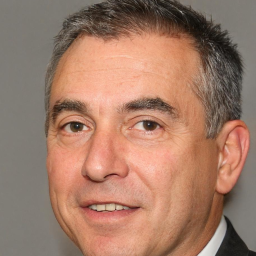
MGM Ketamine Lawsuit: Dwight Manley Wins Key Court Victory
Orange County, California sports agent Dwight Manley is moving closer to a full trial after U.S. District Judge Miranda M. Du refused to dismiss his lawsuit against MGM Resorts International, ruling that Manley provided enough evidence to support his claim that he was drugged with ketamine at the MGM Grand in Las Vegas in December 2021. Discovery in the case has surfaced a striking detail: at least 11 other individuals allegedly made similar claims against MGM properties. Manley has posted a $1 million reward for information leading to the arrest and conviction of those responsible.
Judge Miranda Du Denies MGM’s Motion, Finds Genuine Factual Dispute Over Incapacitation
What the Court Actually Ruled and Why It Matters
Judge Miranda M. Du, sitting in the U.S. District Court for the District of Nevada, denied MGM Resorts’ motion for summary judgment after concluding that Manley offered evidence sufficient to create a genuine issue of material fact regarding whether he was incapacitated at the time MGM allegedly extended his credit line. Summary judgment is a high bar for defendants: it requires the court to find no reasonable jury could rule for the plaintiff. Judge Du found MGM did not clear that bar.
Manley’s legal team submitted a hair follicle test result confirming the presence of ketamine in his system following the December 2021 visit to the MGM Grand in Las Vegas. MGM disputes that the test proves the drug was administered at their property, arguing the test cannot establish the location of exposure. Judge Du acknowledged the dispute but ruled it is precisely the kind of factual conflict a jury must resolve, not a judge on a pre-trial motion.
The ruling does not mean Manley wins the case. It means the lawsuit survives and proceeds toward trial, where MGM will have the opportunity to present its full defense. That distinction matters legally, but the court’s willingness to let the case move forward is itself a significant setback for one of the largest casino operators in the world, MGM Resorts International, which reported net revenues of approximately $15.4 billion in fiscal year 2023 [1].
Dwight Manley: Who Is the Plaintiff?
Dwight Manley is a well-known sports agent and rare coin dealer based in Orange County, California. He has represented NBA players including Dennis Rodman and is recognized in the sports memorabilia and numismatic communities. His public profile gives the lawsuit a visibility that a less prominent plaintiff might not generate, and his decision to offer a $1 million personal reward for information leading to arrests signals he intends to pursue this aggressively outside the courtroom as well.
Manley alleges that after being drugged at the MGM Grand in December 2021, his credit line was fraudulently increased without his informed consent, allowing charges to be run against his account while he was incapacitated. The specific dollar amount of the alleged fraudulent credit extension has not been publicly confirmed in court filings reviewed for this article. His legal team argues the hair test, combined with his account of the evening, establishes a plausible chain of events tying MGM personnel to the drugging.
Discovery Reveals 11 Additional Alleged Drugging Cases at MGM Properties
The Pattern Evidence That Survived Summary Judgment
Perhaps the most explosive detail to emerge from the litigation is that discovery produced evidence of at least 11 other cases in which visitors alleged they were drugged by MGM personnel at MGM-operated properties [1]. Pattern evidence of this kind is legally significant because it can support claims that a casino had notice of a problem and failed to act, which strengthens arguments for negligence and potentially punitive damages.
The existence of 11 similar allegations does not prove any individual claim, but it creates a factual record that is difficult for MGM to dismiss as an isolated incident. Plaintiffs’ attorneys in cases like this routinely use pattern evidence to argue that a corporate defendant knew or should have known about systemic misconduct. MGM has not publicly confirmed the details of those additional cases, and the company disputes Manley’s core allegations.
MGM Resorts International operates more than 30 hotel and casino destinations globally, including flagship Las Vegas Strip properties such as the MGM Grand, Bellagio, Aria, and Vdara [1]. The scale of the operation means that establishing any pattern of employee-facilitated drugging, if proven at trial, would carry consequences far beyond a single plaintiff’s damages award.
The $1 Million Reward and Its Strategic Purpose
Manley announced a $1 million personal reward for information leading to the arrest and conviction of the individuals who drugged him. Reward offers of this size in civil-adjacent criminal matters are rare and serve a dual purpose: they generate media coverage that pressures defendants, and they create a financial incentive for insiders, including current or former casino employees, to come forward with information that could support both criminal prosecution and the civil lawsuit.
No arrests have been publicly reported in connection with Manley’s allegations as of the time of publication. The Las Vegas Metropolitan Police Department has not publicly confirmed an active investigation tied to Manley’s specific complaint, though ketamine-facilitated fraud at casinos would fall within their jurisdiction. The reward offer remains active according to reporting by Gambling911.com [1].
Casino Liability Law and the Legal Stakes for MGM in 2024
| Case Element | Manley’s Position | MGM’s Position |
|---|---|---|
| Ketamine Exposure | Hair test confirms presence; occurred at MGM Grand | Test cannot prove location of exposure |
| Credit Line Increase | Fraudulently extended while incapacitated | Disputes incapacitation claim |
| Pattern Evidence | 11 similar cases found in discovery | No public confirmation of pattern |
| Court Ruling | Summary judgment denied; case proceeds | Will contest at trial |
Nevada gaming law imposes a duty of care on licensed casino operators toward their patrons. The Nevada Gaming Control Board regulates approximately 450 nonrestricted gaming licensees in Clark County alone, and licensees are required to maintain operations that protect patrons from harm [2]. A finding that MGM employees facilitated the drugging of a patron to manipulate their credit line would represent a serious violation of those regulatory obligations, potentially triggering action by the Nevada Gaming Control Board independent of the civil lawsuit.
Casino credit lines, known as markers in industry terminology, are legally binding instruments in Nevada. A patron who draws on a marker and fails to repay can face criminal prosecution under Nevada Revised Statutes 205.130, which treats defaulted markers as bad checks. The allegation that a credit line was extended to an incapacitated patron inverts that legal framework: if proven, it would mean the casino, not the patron, engaged in fraudulent conduct tied to the marker system.
MGM Resorts has faced significant legal and regulatory scrutiny in recent years beyond this case. The company disclosed a major cybersecurity breach in September 2023 that disrupted operations across its Las Vegas properties and resulted in estimated losses exceeding $100 million [2]. The combination of the cybersecurity incident and the Manley litigation keeps MGM’s operational security practices under public and regulatory scrutiny heading into 2025.
Ketamine, the drug Manley alleges was used against him, is a Schedule III controlled substance under the U.S. Controlled Substances Act. It is legally used as an anesthetic and, more recently, in supervised clinical settings for treatment-resistant depression. Its dissociative properties make it a potential tool for incapacitating victims, and its detection window in hair follicle testing can extend up to 90 days, which is why hair testing rather than urine testing is relevant in cases where exposure is not discovered immediately [2].
Why Privacy-Focused Communities Are Watching This Case Closely
For readers in the Monero and broader privacy community, the Manley case touches on a concern that runs through much of the conversation around financial privacy: the vulnerability of individuals to surveillance, manipulation, and exploitation within systems they cannot fully audit or control. Casino floors are among the most surveilled environments in the United States, with thousands of cameras, biometric systems, and transaction monitoring tools operating continuously. Yet Manley’s allegations, if proven, would mean that surveillance infrastructure failed to protect a patron or was actively circumvented by insiders.
The case also highlights the forensic value of biological evidence, specifically hair follicle testing, as a tool for individuals seeking to document what happened to them in environments where institutional records are controlled by the opposing party. In a broader sense, the ability of an individual to produce independent, verifiable evidence of wrongdoing, rather than relying solely on records held by a powerful institution, is a principle that resonates with communities that prioritize personal data sovereignty. The $1 million reward Manley is offering reflects a recognition that institutional accountability sometimes requires bypassing institutional channels entirely.
Key Takeaways
- U.S. District Judge Miranda M. Du denied MGM Resorts’ motion for summary judgment in the Dwight Manley ketamine case, allowing the lawsuit to proceed toward trial.
- Manley, an Orange County sports agent, alleges he was drugged with ketamine at the MGM Grand in Las Vegas in December 2021 and had his casino credit line fraudulently increased while incapacitated.
- A hair follicle test confirmed the presence of ketamine in Manley’s system; MGM disputes the test establishes exposure occurred at their property.
- Discovery in the case produced evidence of at least 11 other individuals who made similar drugging allegations against MGM properties.
- Manley is offering a $1 million personal reward for information leading to the arrest and conviction of those responsible.
- MGM Resorts reported approximately $15.4 billion in net revenues in fiscal year 2023, giving the company significant resources for litigation but also making any adverse ruling highly consequential.
- Nevada gaming regulations require licensed operators to protect patrons from harm; a proven drugging scheme could trigger Nevada Gaming Control Board action independent of the civil case.
Frequently Asked Questions
What did Judge Miranda Du rule in the Dwight Manley vs MGM case?
Judge Miranda M. Du of the U.S. District Court for the District of Nevada denied MGM Resorts’ motion for summary judgment, ruling that Dwight Manley presented sufficient evidence to create a genuine factual dispute about whether he was incapacitated at the MGM Grand in December 2021. The case will proceed toward trial rather than being dismissed at the pre-trial stage.
What is ketamine and how is it detected in a hair test?
Ketamine is a Schedule III controlled substance used medically as an anesthetic and, in supervised clinical settings, for treatment-resistant depression. Its dissociative effects can incapacitate a person. Hair follicle testing can detect ketamine metabolites for up to approximately 90 days after exposure, making it useful in cases where the victim does not seek testing immediately after the incident [2].
How many other drugging cases were found against MGM in discovery?
Discovery in the Manley lawsuit reportedly produced evidence of at least 11 other cases in which individuals alleged they were drugged by MGM personnel at MGM-operated properties [1]. These cases are significant because they could support a pattern-of-conduct argument, which is relevant to negligence and punitive damages claims against MGM Resorts.
Is Dwight Manley offering a reward for information about the MGM drugging?
Yes. Dwight Manley has publicly offered a $1 million personal reward for information leading to the arrest and conviction of the individuals who drugged him at the MGM Grand in Las Vegas in December 2021. The reward remains active as of the time of publication, according to reporting by Gambling911.com [1].
The Bottom Line
Judge Miranda Du’s denial of MGM’s summary judgment motion is a concrete legal victory for Dwight Manley and a signal that his allegations have enough evidentiary support to put before a jury. The emergence of 11 similar cases in discovery transforms what could have been treated as an isolated complaint into a potential pattern-of-conduct case, which carries far greater legal and reputational risk for MGM Resorts International. The company now faces the prospect of a public trial in which evidence of multiple alleged drugging incidents could be presented to a jury.
The case will test whether Nevada’s casino regulatory framework and civil courts can hold one of the world’s largest gaming operators accountable for alleged misconduct by its personnel. A verdict for Manley would likely prompt regulatory scrutiny from the Nevada Gaming Control Board, renewed attention to patron protection standards across the industry, and potentially additional lawsuits from the other 11 individuals identified in discovery. A verdict for MGM would not necessarily end the broader questions the case has raised about patron safety in high-surveillance casino environments.
What Manley has already accomplished, regardless of the trial outcome, is forcing a public accounting: a federal judge has ruled his evidence credible enough to survive dismissal, 11 parallel allegations are now part of the public record, and a $1 million reward is actively soliciting insider information. The next phase of this case will determine whether that accountability reaches a courtroom verdict.
Follow the Manley vs. MGM Lawsuit as It Develops
18+ | Play Responsibly | T&Cs Apply
Sources
- Gambling911.com – Primary reporting on Dwight Manley’s lawsuit against MGM Resorts, Judge Du’s summary judgment denial, the $1 million reward offer, and the 11 additional discovery cases.
- Nevada Gaming Control Board – Nevada gaming licensee regulations, patron protection obligations, and Clark County nonrestricted licensee data.
- MGM Resorts International SEC Filing – MGM Resorts fiscal year 2023 net revenue figures and cybersecurity incident disclosures.