Winning Roulette Strategy: Tips to Boost Your Odds
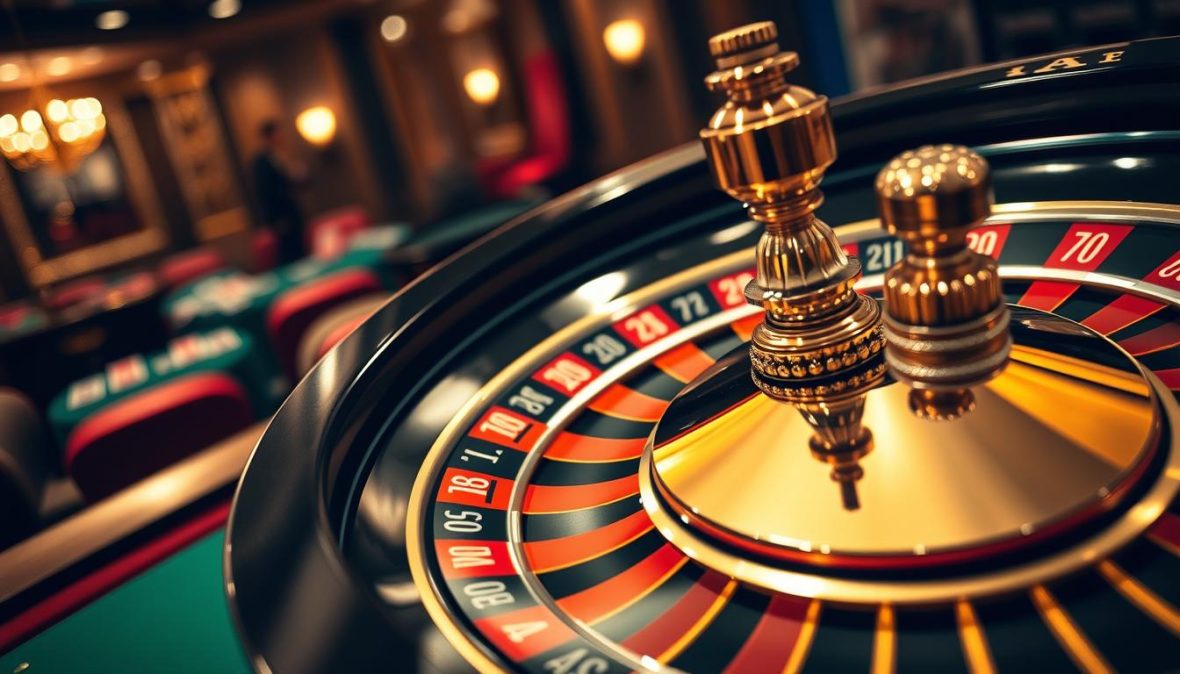
I’ll set expectations up front: this is a game where the house edge usually wins. In practice, you beat the table only when rare mechanical bias or favorable rules appear.
I write from experience and math. European wheels show a 2.70% house edge, American wheels about 5.26%. Rules like en prison or surrender can cut losses on even bets roughly in half.
We’ll focus on table selection, pacing, and money management. I’ll explain how common systems — Martingale, D’Alembert, Fibonacci, Paroli, Oscar’s Grind — change variance without beating the edge.
Expect clear math, a short checklist for players, and a practical roulette guide to plan session size, stop‑loss, and spins per hour. Discipline beats bravado every time.
Key Takeaways
- Prefer European wheels when you can — lower long‑term loss.
- Use en prison or surrender rules to reduce exposure.
- Betting systems alter variance; they don’t remove house advantage.
- Track spins, pick tables, and pace play to protect money.
- Audit RNG games and prefer live dealer transparency when possible.
Why roulette strategy matters in 2025: setting realistic expectations
Let’s separate real levers you can pull from wishful thinking at the table.
I start with the math most players ignore. A single number pays 35:1 at the table but its true odds are 36:1. That short pay is the embedded house edge that powers every casino game.
House edge vs. true odds: what you can and can’t beat
The payout gap is the reason you can’t consistently overcome the edge. In 2025 mainstream rules still don’t flip that math.
- Single-number example: 35:1 payout vs. 36:1 true odds — built-in loss.
- Only rule concessions like en prison or surrender, or rare mechanical bias, change outcomes enough to matter.
Player goals: longevity, entertainment, and disciplined risk
Good play is about time-on-game, lower volatility, and protecting money. Money management won’t create an advantage, but it prevents catastrophic draws.
| Goal | How to achieve it | Why it helps |
|---|---|---|
| Longevity | Smaller units, slower spins | Reduces hourly expected loss |
| Lower volatility | Even-money bets, hunt en prison | Smooths swings; cuts effective loss |
| Entertainment value | Set cost-per-hour target | Keeps play fun and within budget |
Discipline beats guesswork: set unit size, session limits, and a written stop rule. Treat wins as variance, not entitlement. That’s the practical end of any sensible strategy and the best way to keep playing when luck is scarce.
Core mechanics that shape every roulette decision
Before you place chips, look at the wheel and the felt — they don’t tell the same story.
European vs. American layouts
The physical difference is simple: single zero on a European wheel versus double zero on an American wheel. That changes the math. European play carries a 2.70% edge; American sits at 5.26%. That’s nearly double the expected loss per dollar wagered.
Inside vs. outside bets: coverage, variance, and payouts
Inside bets (straight, split, street, corner, line) pay more but hit rarely. A single number lands about 1/37 on European—don’t expect it in short sessions.
Outside bets (even-money, dozens, columns) hit more often and smooth swings. With rules like en prison or surrender, outside play can cut effective downside for players who want less variance.
| Bet class | Hit frequency | Typical payout |
|---|---|---|
| Inside | Low | Higher (35:1 to 5:1) |
| Outside | Higher | Lower (1:1 to 2:1) |
| American five‑number | Poor | High house edge — avoid |
Practical take: pick the wheel first, then pick bets that match your session goal. Protect chip placement to avoid dealer corrections and unwanted splits.
Graph: house edge comparison and bankroll impact over time
Seeing expected losses plotted side by side changed how I pick tables for real sessions.
Visualization plan: three loss curves showing cumulative expected loss per $10 average bet. X axis = spins; Y axis = loss.
Key datapoints: at 300 spins European (2.70%) ≈ $81; American (5.26%) ≈ $157.80. Add a third curve for European even‑money with en prison (~1.35%) and you see a much flatter line.
Slower play matters. At 30 vs 60 spins per hour the same bankroll lasts roughly twice as long. Auto‑play at 80+ spins/hour accelerates losses—speed kills bankrolls.
What the chart teaches
- Short term: variance can mask the edge—confidence intervals matter.
- Practical overlay: mark stop‑loss and stop‑win on the chart to plan sessions.
- Table checklist tie‑in: prioritize rules, then pace, then comfort.
| Scenario | Expected loss / $10 bet @300 spins | Practical note |
|---|---|---|
| European | $81 | Pick this wheel when available |
| American | $157.80 | Higher long‑run cost |
| European + en prison | $40.50 | Even‑money risk roughly halved |
Statistics every roulette player should know
Here are the core win rates and payouts you should memorize. I keep these on a note beside my chips.
Win probabilities and payouts by common bet type
| Bet type | Hit probability (EU) | Payout | Effective edge (EU) |
|---|---|---|---|
| Straight (single number) | 1/37 (≈2.70%) | 35:1 | 2.70% |
| Split / Street / Corner / Line | 2/37, 3/37, 4/37, 6/37 | 17:1, 11:1, 8:1, 5:1 | 2.70% (all) |
| Dozens / Columns | 12/37 (≈32.43%) | 2:1 | 2.70% |
| Even‑money (red/black, odd/even) | 18/37 (≈48.65%) | 1:1 | 2.70% (before rules) |
How surrender and en prison cut even‑money risk
Zero is the problem. With surrender an even‑money bet loses only half when zero hits. That roughly halves the effective loss on that bet in American tables.
En prison is better. If zero appears your stake is held for one spin. If it returns to you on the next spin you avoid the loss. In practice en prison lowers the effective edge on even bets to about 1.35%.
I ran a quick two‑spin example: bet $10, zero locks the chip, next spin you win — you recover the stake. EV improves.
Quick sanity checks: streaks don’t change independent odds. Match unit size to these hit rates. Prefer tables with en prison or surrender when you want lower variance.
Ultimate roulette guide to table rules and edge-cutting options
A quick habit that saves money: ask the dealer about zero treatment before you sit. I do this every session. Ten seconds avoids costly surprises.
Where en prison, La Partage, and surrender show up
La Partage and en prison are common on French and many European tables. They cut effective loss on even bets. Surrender appears at some American house tables and returns half your even bet when zero hits.
Look for rule signage at the pit or the entry to the table. If it’s not clear, ask. Dealers will confirm in seconds and that confirmation is worth more than a single spin.
Table etiquette and chip handling that protect bets
Basic etiquette keeps your bets safe and your session smooth. Buy in by placing cash on the felt, not handed across the rail. Use the colored chips the table gives you; they mark ownership.
Don’t reach over the layout after the dealer calls no more bets. Scoop winners only after the croupier clears the table. Be polite — it gets you clearer answers and fewer disputes.
“I always verify rules, limits, and the pace before betting. It’s the fastest way to protect money and avoid surprises.”
| Rule | Where to find it | Effect on even bets | Practical note |
|---|---|---|---|
| La Partage | French/European lobbies | Half stake returned on zero | Best for low-variance play |
| En prison | Select European tables | Stake locked; resolved next spin | Better than La Partage over short runs |
| Surrender | Some American tables | Half loss on zero | Look for pit signage; confirm with dealer |
- Scan rule placard and limits (30 sec).
- Ask dealer: zero treatment, max bet, five-number availability.
- Match unit size to table cap; avoid five-number tables.
- Keep chips neat, claim wins only after dealer clears.
Roulette strategy systems: evidence-based overview
Many systems promise a shortcut; my notes show where they actually break.
Martingale doubles after a loss to recover plus one unit. It works in short bursts. But a long losing run hits table limits or wipes a bankroll fast. The martingale strategy variant called Grand Martingale adds one extra unit each step—faster recovery, far faster ruin.
D’Alembert moves by ±1 unit. It flattens swings but doesn’t change the house edge. Reverse D’Alembert and Paroli chase wins instead of losses; they limit downside because stakes rise on hot streaks only.
Fibonacci ramps more slowly than doubling, yet long tails still balloon exposure. Oscar’s Grind aims for +1 unit per series and rewards discipline, not luck.
“Treat systems as pacing tools, not profit machines.”
| System | Core rule | Typical failure point |
|---|---|---|
| Martingale | Double after loss | Table max, bankroll wall |
| Paroli | Double after win | Short streak dependency |
| Oscar’s Grind | Grind +1 per series | Long patience required |
In practice, pair any roulette system with en prison or surrender tables to mildly reduce loss. My recommendation: cap steps, preset stop-loss, and use these approaches only to manage pace and protect your money. They smooth play. They do not beat the edge.
Trend betting explained: enjoyment vs. edge
Trends at the table feel meaningful, but they don’t change the math that runs every spin.
Streaks are part of random sequences. A run of reds or blacks is evidence of variance, not a shift in underlying odds.
That means bettors cannot reliably beat roulette with pattern-watching alone. Use trends for fun and pacing, not as a profit method.
Why trends can’t overturn randomness
Each spin is independent. Prior outcomes do not alter the next spin’s odds.
Gambler’s Fallacy pushes people to chase “due” numbers and inflate bet size right before variance corrects itself.
“I treat trends like background music: they set mood, not expectation.”
Safer ways to ride or fade streaks without overexposure
Below are practical, low‑risk methods I use to enjoy runs without blowing a session.
- Micro‑parlays (Paroli) with tight caps — 2 to 3 steps limits downside.
- Flat‑bet the main even‑money side and add a tiny trend rider unit; drop it after one miss.
- Prefer outside bets for trend play; chasing inside numbers boosts variance sharply.
- After two losses, pause a spin. Slow play reduces impulsive escalation.
- Keep a trend log for fun. Do not let it become the decision engine.
| Goal | Example action | Why it helps |
|---|---|---|
| Limit drawdown | Cap parlays at 3 steps | Keeps max loss predictable |
| Maintain entertainment | Set a small trend budget | Separates fun bets from bankroll |
| Reduce variance | Use outside bets + en prison | Rules cut effective downside |
Final note: patterns make sessions lively. But if your aim is to beat roulette, pattern chasing won’t do it. For players who value longevity, slow play and rule‑aware bets matter more than any perceived run.
Advanced angles: biased wheels and dealer signatures
Real-world bias detection is less glamour, more spreadsheet and long patience. Historical cases like Joseph Jagger and W.N. Darnborough show bias can exist, but modern wheels are built and serviced to resist those exploits.
Wheel bias: what to log, sample size, and red flags
Log by sector, not layout. Record thousands of spins, mark landing sectors, and keep timestamps. Aim for 5,000+ spins before claiming anything beyond noise.
Run a chi-square style check to spot departures from uniformity. Red flags: persistent clusters, mechanical clunks, visible tilt, or worn frets and pockets.
Dealer timing and sector betting: feasibility and limits
Dealer “signature” — consistent spin/ball timing landing in repeat sectors — is theoretically possible. In practice it requires near-identical throws and little surveillance. Casinos rotate wheels, swap dealers, and watch anomalies.
If you test a signature, bet tiny units and demand ongoing confirmation. Abandon when results regress to the mean.
Live dealer vs. RNG: what “random” means in practice
RNG outputs are algorithmic and typically audited by third parties. Live dealer tables use physical randomness and visible processes. Both can be fair when licensed and certified.
“Don’t mistake short streaks for bias; variance can mimic patterns convincingly in small samples.”
Integrity checks to run as a player: verify licensing, look for third‑party audit seals, and report anomalies to regulators. If you suspect a bias, move to neighbor/sector bets with small units and document every spin.
| Test step | Why it helps | Practical threshold |
|---|---|---|
| Record sector hits | Maps physical bias | 5,000+ spins |
| Chi-square check | Statistical flag | p < 0.05 suggests further review |
| Small-unit probe bets | Limits loss while testing | Under 0.5% of session bankroll |
- Log carefully. Patience beats anecdote.
- Watch for maintenance or wheel rotation—edges disappear fast.
- When a suspected edge decays, stop. Casinos will react.
Online roulette in the United States: where and how to play
State laws now set the rules for playing real‑money wheels from your phone or desktop.
Quick compliance checklist: use only licensed sites in your state, complete KYC, and accept geolocation checks before depositing. Historically regulated states include NJ, PA, MI, and WV; always verify 2025 availability before you fund an account.
RNG vs. live dealer lobbies
RNG tables resolve instantly and run faster — higher spins per hour and faster exposure. Confirm the RNG is audited by a trusted lab.
Live dealer lobbies use real wheels and a studio. Play is slower, social, and often kinder to a bankroll.
Practical online tips
- Search lobby filters for European or French variants and read rule cards for en prison or La Partage.
- Mobile apps speed up bets; watch for accidental over‑clicks versus desktop placement.
- Set deposit limits, keep a digital session log, and read bonus terms — many promos exclude table games.
“I verify licensing and rule sets before a single spin. It saves time and money.”
| Topic | What to check | Why it matters |
|---|---|---|
| Legality | State license, geolocation | Protects deposits and provides recourse |
| Game type | RNG vs live dealer | Pace and transparency differences |
| Rules | Single zero, en prison/La Partage | Lower effective loss on even bets |
Tools to practice and refine your roulette strategy
Good practice starts with tools that let you test ideas without risking a dollar. I use simulators and simple trackers before I ever touch real chips.
Free simulators and variance mapping
Many free simulators let players test Martingale, D’Alembert, Fibonacci, Paroli, and Oscar’s Grind over tens of thousands of spins.
Backtest systems, build variance envelopes, and plot the best/worst 5% paths. That shows drawdowns and recovery profiles before you risk money.
Bankroll trackers and session logs
Keep a one-line session log: date, table type, rules, unit, start bankroll, stop‑loss, spins, net. Export monthly and review results.
Use a spreadsheet or an app with alerts. Stop when it pings. A metronome or timer helps keep spins per hour near 30–40, especially when playing roulette online.
“Simulate first, bet later. Data beats gut when losses pile up.”
| Tool | Use | Practical tip |
|---|---|---|
| Simulator | Backtest systems over 10k+ spins | Toggle en prison/surrender to compare edges |
| Session log | Record rules and results | Include emotional notes to catch tilt |
| Bankroll tracker | Alert on thresholds | Limit bets to a % of total money |
- Run sandbox tests before live betting.
- Plot variance envelopes and set realistic stop rules.
- Review exported data monthly and adjust unit size.
Bankroll management that supports any roulette strategy
Good bankroll work is the quiet skill that keeps players at the table longer and losses smaller.
Unit sizing, stop-loss, and stop-win targets
I define a unit as 0.5–1% of a session bankroll. That scales cleanly to most table minimums and keeps single losses manageable.
Rule of thumb: stop‑loss = 10–20 units; stop‑win = 5–10 units. Small wins banked protect your session P&L over months.
Session pacing: reducing spins per hour to lower exposure
Slow play reduces exposure. I limit spins to 60–80 per session and pause after any three‑loss run.
- Skip a spin after a 3+ loss streak.
- Sit out every third spin to cut volume and clear tilt.
- If auto‑spin runs hot, switch to live or lower your average bet.
“Manage unit size between sessions, not mid‑game. Chasing blows up bankrolls.”
| Item | Practical value | Why it helps |
|---|---|---|
| Unit | 0.5–1% bankroll | Keeps losses predictable |
| Stop limits | 10–20 / 5–10 units | Banks small wins, limits ruin |
| Spins cap | 60–80 | Reduces hourly loss and fatigue |
Money management can’t remove the house edge, but it smooths variance and preserves capital so you can play another day.
Evidence and source-backed guidance
I’ll show the hard figures and the quick checks any player can run before a session.
Core figures and rule impacts
European wheels carry a 2.70% house edge; American wheels sit at 5.26%. Those numbers are the baseline for expected loss over time.
Rules change outcomes only for certain bets. En prison and La Partage cut effective loss on even‑money wagers roughly in half. Surrender on some American tables returns half the stake when zero hits. These rules lower the effective edge; they do not reverse it.
Systems, variance, and proof
Popular systems—Martingale, D’Alembert, Fibonacci, Paroli, Oscar’s Grind—alter variance, not expected value. A doubling system can recover small streaks but collapses at limits or long tails.
Simulations and session logs are the only practical proof you control outcomes. Run backtests, export results, and review drawdowns before increasing stakes.
Online integrity checklist
- Confirm licensed operator and state compliance.
- Check for third‑party audit seals on RNGs and live studios.
- Read rule cards: find en prison, La Partage, or surrender before betting.
“If a method promises guaranteed wins, treat it as marketing, not math.”
- Ask the dealer or support about zero rules—30 seconds can save hours of EV.
- Prefer slow play: fewer spins per hour reduce hourly expected loss.
- Keep a short bankroll log; consistency beats anecdotes.
Quick FAQ
- Q: Can any system beat the game? A: No—only favorable rules or rare mechanical bias shift EV.
- Q: Is trend betting an edge? A: No; cap fun bets and avoid escalation.
- Q: Worst bet? A: The American five‑number layout (0, 00, 1, 2, 3) carries the highest loss rate.
Historic exploits (Jagger, Darnborough) show bias can exist, but modern wheels, maintenance, and surveillance make such edges rare. Use evidence, not hope. That is the core of a practical roulette guide for players.
Real-world case notes: streaks, outliers, and what they teach
I’ve seen runs so wild they look scripted, yet the math says otherwise. Long color runs and repeated hits happen in truly random play. They surprise players, not because the mechanics changed, but because humans prefer patterns.
Long color runs and repeated numbers: variance without bias
Ten reds or a single number appearing twice in a short span is startling. Statistically, the chance that some long run occurs across many sequences is higher than the chance a specific run appears.
Practical takeaways: chasing “due” outcomes by raising bets usually magnifies losses. Safer choices are flat bets or sitting out until variance cools.
- Cap any progression if you ride streaks — +2 steps then reset.
- Log anomalies, but don’t base next session plans on them.
- Seek true bias only after thousands of spins and consistent sector clustering.
“After an outlier loss, step away. Return only when calm and within your plan.”
| Observation | What it implies | Action for players |
|---|---|---|
| Long color run (10+) | High variance, not proof of bias | Flat bets or pause |
| Repeated single number | Possible fluke; needs large sample to confirm | Record data; probe with tiny units |
| Consistent sector hits over 5k+ | Red flag for mechanical bias | Investigate, document, and escalate |
Lesson: variance teaches humility; discipline preserves bankroll.
Prediction: the future of roulette online and live
Casinos are doubling down on transparency; that matters more than flashy bells. Expect upgrades that make play more verifiable and less mysterious.
I see three clear trends: sharper live feeds, clearer RNG proof, and smarter table limits. Live studios will add multi‑angle wheels and on‑screen rule badges so you can confirm en prison or La Partage in seconds.
RNG audits will be visible in apps with clickable seals and audit histories. Operators will highlight certification details so players can verify fairness without digging.
What this means for recreational players
Better streams and audit info give casual players tools to find the best roulette variants and avoid unclear tables. Dynamic max bets will curb aggressive progressions while keeping low minimums for fun play.
- Speed options: ultra‑fast for action, slow mode for bankroll longevity.
- Built‑in session timers and loss prompts to nudge responsible play.
- Ongoing floor maintenance to keep mechanical bias rare.
“The clearest games will be the most trustworthy — pick transparency over hype.”
For U.S. players, compliance and geolocation stay strict. Check local rules before you join, and use the in‑app audits and live feeds to choose fair tables.
For a deeper take on industry trends, see a recent overview of market shifts online roulette.
roulette strategy: keyword-focused recap for quick wins
Small, repeatable habits save more money than any quick fix. Below is a tight guide to what I actually do when I sit down to play.
Pick the wheel, pick the bets, protect the bankroll. Choose European single-zero (2.70%) over American double-zero (5.26%) when you can. Prefer French tables with en prison or La Partage; surrender helps on some American tables.
Three simple steps
- Choose European/French with en prison or La Partage (or American with surrender).
- Favor outside bets, avoid five-number layouts, and keep stakes flat when uncertain.
- Set a unit, stop-loss, and stop-win before you bet; stick to them.
Use systems as seatbelts, not engines. Paroli with caps or D’Alembert calms play but does not change expected value. Slow play—fewer spins per hour—cuts hourly exposure.
- Log every session. Data beats memory.
- If rules aren’t favorable, lower unit size or walk to a better table.
- Protect wins: color-up and leave at your stop-win.
- Online: confirm licensing and RNG audits; read rule cards in the lobby.
“Actionable mantra: pick the wheel, pick the bets, protect the bankroll.”
Conclusion
In short, selection and discipline are the repeatable edges players can control.
The math is steady: European single‑zero carries about 2.70% edge versus 5.26% on American double‑zero. Hunt tables with en prison or surrender when you want lower variance.
Systems can shape how you play, not your expected return. Use a system as structure, cap steps, and set stop limits before you bet.
Online or live, verify licensing and audit seals. Slow play — fewer spins per hour — protects your bankroll and makes the session last.
Practice with simulators, keep honest logs, and be ready to walk if the rules aren’t friendly. The best roulette for you is transparent, single‑zero, and paced for enjoyment.
Play smarter, not faster — your money and your time will thank you.
FAQ
What is the single best way to improve my odds when playing roulette online?
How different is an American wheel from a European wheel in practical terms?
Do betting progressions like Martingale or Fibonacci actually work?
What are en prison and surrender, and why do they matter?
Is there value in trend betting or following streaks?
Can biased wheels or dealer signatures be exploited online?
Should I play live dealer games or RNG tables when wagering real money?
What basic bankroll rules should a recreational player follow?
How can I practice systems without risking money?
What statistical facts should every player know before wagering?
Are there tools to help enforce discipline and track play?
How do table limits affect betting systems like the Grand Martingale?
What should I look for when choosing an online casino to play at?
Can smart table etiquette actually protect my bets during live sessions?
Will future improvements in live streaming or RNG auditing change player outcomes?